Wir machen den Schluchtensteig individuell planbar – mit Unterkunft, Gepäcktransport, flexibler Etappengestaltung und optionaler digitaler und persönlicher Begleitung.
1-6 Gefärten
1-7 Tage
bis zu 118km
Schwarzwald
Clear head
Discovery
Daring
Ein Weg nach draußen. Vielleicht auch ein kleiner Weg zurück zu dir.
„Was findest Du, wenn Du einem Fluss bis zu seinem Anfang folgst?“
83 Kilometer in fünf Etappen: von Albbruck am Hochrhein das Albtal hinauf nach St. Blasien und in einer Runde über den Feldberg zurück – mit Basislager, Shuttle und Gepäcktransport.
1–6 Gefährten
5 Etappen
83 km
Südschwarzwald
Clear head
Discovery
Daring
Ein Weg nach draußen. Vielleicht auch ein kleiner Weg zurück zu dir.
„Geh los. Verlier Dich ein Stück. Komm anders zurück.“
Ein TrailRun von Haus zu Haus: vom Berghaus Walden ins Basislager nach St. Blasien oder umgekehrt. Mit der Bahn? Dann die lange Fassung in drei Etappen, vom Bahnhof Freiburg bis zum Bahnhof Schluchsee-Aha. Je Haus eine Nacht, der Weg ist vorbereitet.
1–6 Läuferinnen und Läufer
1 Lauftag – mit der Bahn 3 Etappen
Hochschwarzwald
Clear head
Discovery
Daring
Ein Weg nach draußen. Vielleicht auch ein kleiner Weg zurück zu dir.
„Schluchtensteig trifft Albsteig. Eine große Runde durch den Südschwarzwald.“
Die ultimative Wander-Challenge im Südschwarzwald: 202 Kilometer in zehn Etappen von Stühlingen nach St. Blasien – zwei Steige, ein Weg, und dreimal führt er durch unser Basislager.
1–6 Gefährten
10 Etappen
202 km
Südschwarzwald
Clear head
Discovery
Daring
Ein Weg nach draußen. Vielleicht auch ein kleiner Weg zurück zu dir.
Zwei Tage für Projektteams, bei denen ein gewöhnlicher Rückblick nicht reicht: Projektverlauf, Ursachen, Ausrichtung – und eine Roadmap, hinter der alle stehen.
Teams von 3–12
2 Tage
Trail + Basislager
Basislager St. Blasien
Clear head
Discovery
Daring
Ein Weg nach draußen. Vielleicht auch ein kleiner Weg zurück zu dir.
„Was würdet Ihr einander sagen, wenn kein Bildschirm zwischen Euch stünde?“
Ein Tag für Euer Scrum-Team: draußen auf dem Trail sammelt Ihr, was wirklich war. Im Basislager wird daraus ein priorisierter Maßnahmenplan mit Namen und Datum.
Teams von 3–12
1 Tag
Trail + Basislager
Basislager St. Blasien
Clear head
Discovery
Daring
Ein Weg nach draußen. Vielleicht auch ein kleiner Weg zurück zu dir.
„Wann hattet Ihr zuletzt zwei Tage ohne Tagesgeschäft?“
Zwei oder drei Tage im Basislager für Teams im Umbruch: Trail, vertiefte Moderation, Arbeitsblöcke und bewusst eingeplante Pausen – mit Übernachtung in der Villa Waldeck.
Teams von 3–12
2–3 Tage
Trail + Basislager
Basislager St. Blasien
Clear head
Discovery
Daring
Ein Weg nach draußen. Vielleicht auch ein kleiner Weg zurück zu dir.
Tools & methods for walking paths mindfully – all grounded in science, not esotericism.
Some meetings …
… should be paths.
Some meetings should be paths.
Why it works
Scientific foundations
Various fields of research show that movement, surroundings and perception can influence how we think, learn and feel.
Working professionally outdoors?
Methods on Gretyl’s paths
Outdoors, thinking is free. But capturing insights, sharing results or reaching decisions can quickly become a challenge in the forest. That’s why we don’t leave methods behind outdoors – we bring them in deliberately and adapt them where necessary.
Methods on Gretyl’s paths · 1 of 9
Team and organisational development
Teams don’t develop in the conference room alone. Many proven formats gain a new quality outdoors.
Design ThinkingUnderstand the problem → gather perspectives → ideas → prototype → feedbackObservation tasks, user perspectives while walking, idea stations, testing prototypes along the way.
Agile methods / ScrumSprint Planning · Daily as walk & talk · Sprint Review · RetrospectiveThe retrospective as a path with stations: “What went well?” – “What slowed us down?” – “What will we change?” – and then on together to the next iteration.
Liberating Structures1-2-4-All · TRIZ · Impromptu Networking · Troika Consulting · What I Need From YouMany of these formats work wonderfully while walking, at waypoints or in changing small groups.
World Café / Open Space / BarCamp elementsSeveral topic spots in the forest – the groups move between the stations.
Team Canvas / Team CharterThe team walks through questions together: What connects us? What do we need? What do we want to achieve?
Stakeholder Mapping / System MappingPeople, systems or influencing factors are positioned in space – the landscape becomes the visualisation.
Methods on Gretyl’s paths · 2 of 9
Project work
Projects are paths: you set off, reach forks in the road, sometimes lose your way – and at best, arrive together.
Project kick-off
Not
Three hours of PowerPoint and project plan.
But
“We’re setting off together.”
Questions along the way:
Where do we want to go?
Why are we setting off at all?
What should be different at the end?
What could hold us up?
What do we need along the way?
Do I trust my fellow travellers?
Project reviewThe team looks back: what have we actually achieved?Outdoors, the project’s path so far can even be laid out in space.
Project post-mortemNot just “What went wrong?”, but: “Where on our path did we take the wrong turning?” This leads to a retrospective, timeline and lessons learned.
Pre-mortemWe imagine the project has failed. Why?Each person first walks a stretch of path alone and collects possible stumbling stones – an established decision-making method, right in the middle of the Gretyl world.
Methods on Gretyl’s paths · 3 of 9
IT architecture
A field of methods in its own right – and a speciality of Gretyl: experience from IT and architecture meets the path.
Architecture Kick-off
Architecture Vision
Architecture Decision Records (ADR)
Architecture Review
Solution Design
Threat Modeling
Domain / Context Mapping
Event Storming
Impact Mapping
Architecture Trade-off Analysis
Technical Debt Review
Post-Implementation Review
What happens if we do this not at the whiteboard, but in the forest?
Event storming outdoors
Each waypoint stands for an event.
Architecture decision
Two paths. Two architecture options. Which qualities speak for which path?
When in doubt, this produces an IT architecture based on consensus and the good ideas of everyone involved.
(And isn’t that the better option compared with the traditional approach, where whoever shouts loudest wins?)
Methods on Gretyl’s paths · 4 of 9
Creativity & problem solving
An area of its own alongside design thinking – because there isn’t always time for a dedicated design thinking project.
(And interwoven approaches beat isolated ivory towers. These methods help with that – without starting from zero.)
Brainstorming
Brainwriting
SCAMPER
Six Thinking Hats
Mind Mapping
Crazy 8s
Morphological box
Analogies / change of perspective
Worst Idea
Reverse Brainstorming
“How might we …?”
Five Whys
First Principles Thinking
For example: walking with a question
Walk alone for 10 minutes. Take a question with you. Don’t solve it – just notice which thoughts come up. Then exchange.
Methods on Gretyl’s paths · 5 of 9
Decisions
Decisions are ideally suited to spatial methods.
Decision Matrix
Weighted Scoring
SWOT
Cost-Benefit
Impact / Effort Matrix
Eisenhower Matrix
RICE
MoSCoW
Dot Voting
Consent instead of consensus
Pre-Mortem
Six Thinking Hats
Second-Order Thinking
Reversibility / Two-Way Door
10/10/10 method
“What would you advise your best friend?”
Especially nice outdoors: the decision walk
At the crossroads there are two paths. Not overloaded with metaphor – simply: path A, path B.
Each person first decides for themselves. Then exchange: “What led you to your path?”
A small but very tangible decision format.
Methods on Gretyl’s paths · 6 of 9
Meetings & collaboration
Not every meeting has to go into the forest. But every meeting can learn from what works outdoors.
Walking Meeting
Stand-up
Check-in / Check-out
1-2-4-All
Silent Start
Think-Pair-Share
Timeboxing
Parking Lot
Fist-to-Five
Dot Voting
Temperature Check
Lightning Decision Jam
Consent Decision
Meeting Retro
Kill the Meeting – do we even need this meeting?
Plus small nudges that work straight away:
Stand instead of sit. (Astonishingly intuitive on a tour through the forest.)
Think for two minutes first, then speak.
Individual opinions first, then group discussion.
No presentation without a concrete question. (That’s easier to live by outdoors too.)
Every discussion ends with a decision or a next step.
Small methods. Big impact.
Methods on Gretyl’s paths · 7 of 9
Personal reflection & development
An area of its own – deliberately not lumped together with the business methods. This is about paths that lead to yourself.
Self-reflection
The Work (Byron Katie)
Beliefs according to Robert Betz – pragmatically
Journaling
Values work
Wheel of Life
Ikigai
Lifelines
Change of perspective
Gratitude
Future Self
Best Possible Self
WOOP
Implementation Intentions
Personal stock-taking
About Robert Betz: we deliberately take only the pragmatic part – recognising and questioning your own beliefs, perceiving feelings instead of pushing them away, taking responsibility for your own attitude. Anything that goes beyond that into the spiritual, we leave behind on the path. Faith is a personal matter for each individual – we don’t proselytise.
Impulses from ACT
Acceptance and Commitment Therapy (ACT) offers food for thought that fits a path astonishingly well:
Values
Acceptance
Defusion – distance from your own thoughts
Self as context
Committed action
GROW – a coaching classic, made for a walk
GoalWhere do I want to go?
RealityWhere do I stand?
OptionsWhich paths are there?
WillWhich one will I take?
Important: Gretyl doesn’t turn this into therapy. A path can do you good – but it is no substitute for medical or psychotherapeutic support.
Methods on Gretyl’s paths · 8 of 9
Reflection, learning & transfer
A workshop isn’t over when you’re back at the car park. What matters is what arrives in everyday life.
Gretyl’s way: methods with both feet on the ground
None of these methods is new. What’s new is how we use them: not as a compulsory programme in the conference room, but as a tool on the path.
Chosen to fit: every path comes with the methods that suit the occasion, the group and the terrain.
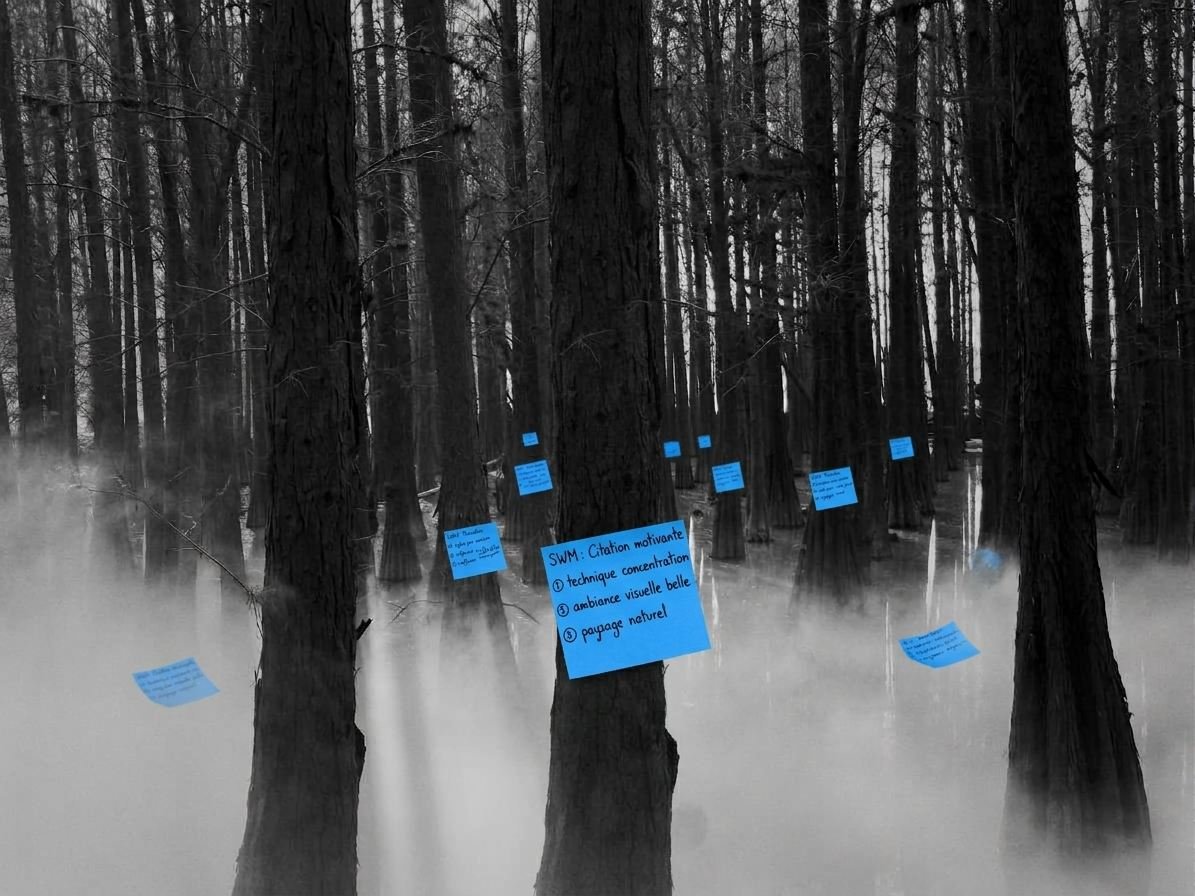
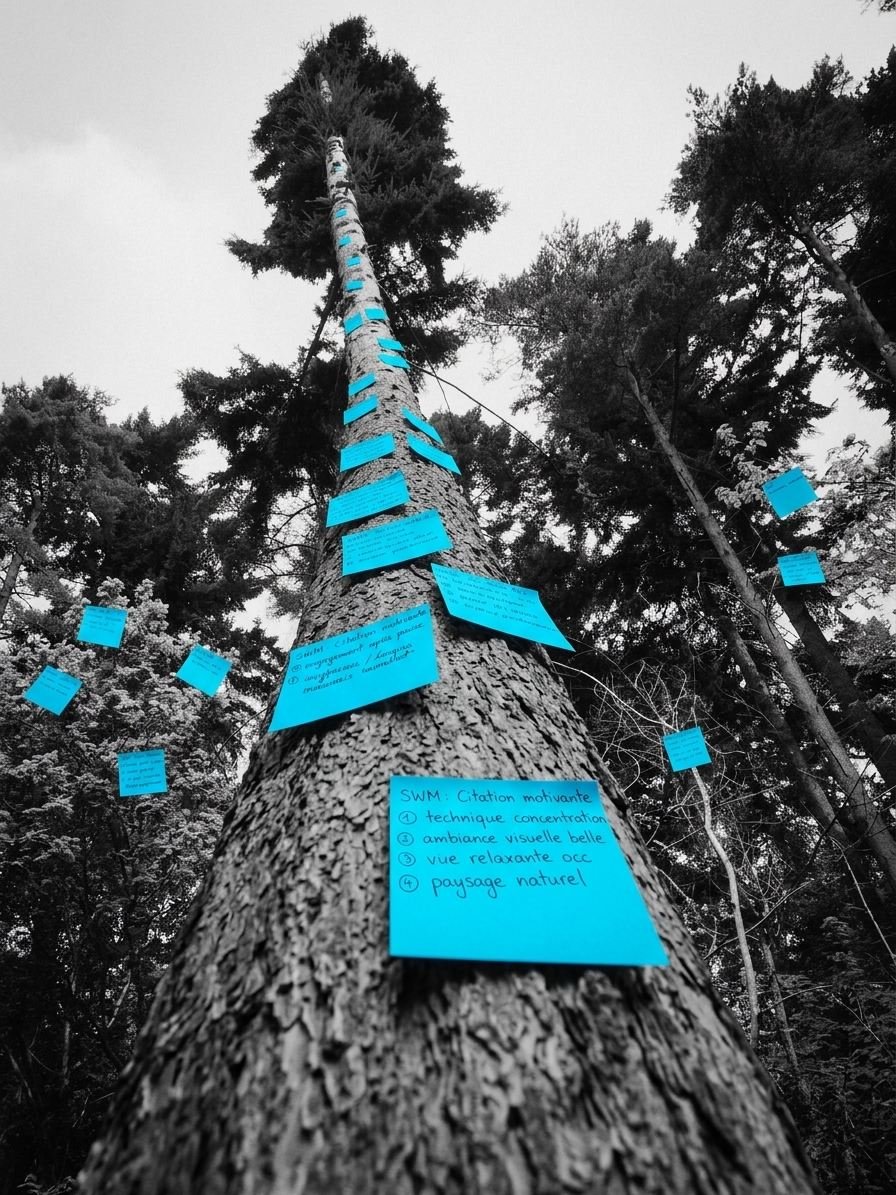
Deliberately rebuilt: what works at the flipchart is adapted for outdoors – stations instead of slides, waypoints instead of sticky notes.
As provisions or as a companion: Gretyl gives you methods and questions to take with you in advance – or walks alongside you.
Captured: insights become artefacts – card, note, audio, document – so that they outlast the path.
Whether privately on your own or as a team trying to rescue a project: the method follows the path – not the other way round.
The star on Gretyl’s paths is never the path, never the method and never the coach. It’s always you – and in a team, it’s all of you.
Self-efficacy: what remains
That’s exactly what it’s about for us: self-efficacy – the belief that you can make a difference through your own efforts. The psychologist Albert Bandura showed that it grows most strongly through your own experiences of success. Not by listening, but by doing.
A path makes this experience tangible: you managed the climb yourself. You made the decision at the crossroads yourself. The insight along the way is your own. That’s why we don’t hand out ready-made answers, but methods and questions that help you reach the goal yourself – or as a team.
And you take this feeling with you: back to your team, your project, your life.
SourceBandura, A. (1997). Self-Efficacy: The Exercise of Control. New York: W. H. Freeman.
Working professionally. Outdoors. With both feet on the forest floor.
Who or what is Gretyl along the way?
Your companion on the path
Whether alone or as a team, whether a loop through the city park or a demanding mountain tour – Gretyl is always there: as a structure that gives support, with questions you take along with you, or as a companion at your side.
Your companion on the path · 1 of 12
Facilitator – process guide
A facilitator doesn’t primarily deliver the solution, but designs a process in which a group arrives at insights and decisions itself.
Typical tasks
Structuring the process
Asking questions
Making perspectives visible
Enabling discussions
Preparing decisions
Observing group dynamics
Securing results
Outdoors
Facilitating outdoors doesn’t mean standing at the front all the time – and sometimes it may even mean not being there at all. The path takes over part of the structure – the facilitator asks the right questions and steps in at decisive moments.
Your companion on the path · 2 of 12
Designer of the path
Workshop designers or learning experience designers don’t necessarily run the workshop themselves – they design the experience.
Decisions include:
Where does the path begin?
Where is there a task?
Where is a break needed?
When do participants work alone?
When in pairs?
When as a group?
Where is a decision made?
Where is there reflection?
What happens at the end?
This corresponds to concepts from learning experience design (LXD) and experiential learning. At Gretyl, this means: the companion builds a learning and experience path.
Not
“I’ll run a workshop for you.”
But
“I’ll design a path on which you can work for yourselves.”
Your companion on the path · 3 of 12
Coach
A coach tends to work with individuals or small groups – and doesn’t say what’s right, but helps you through questions to recognise for yourself what’s right for you.
Typical foundations
GROW
Solution-focused coaching
Systemic coaching
Motivational interviewing
Outdoors: walk & talk / coaching walk
One person walks, the coach accompanies them. The spatial situation is what makes it interesting: you’re not sitting face to face, and eye contact doesn’t have to be held all the time. This even works when the accompanying coach isn’t on the path at all.
Your companion on the path · 4 of 12
Sparring partner
Less a formal method – but a role that makes the difference. A sparring partner brings their own experience and expertise.
A coach asks
“What do you think?”
A sparring partner also says
“I see a risk here that you might be overlooking.”
This means Gretyl offers two kinds of guidance:
Facilitation: we help you arrive at a solution yourselves.
Sparring: we bring in our experience and think it through with you.
Your companion on the path · 5 of 12
Subject matter expert
One step further into the subject: this is where expertise and method come together.
IT architecture
Agile coaching
Organisational development
Project management
UX design
Leadership development
For example: the architecture walk
An architect accompanies the team on a path and, at certain points, asks questions about:
architecture decisions
trade-offs
risks
dependencies
technical debt
The companion is not just a moderator here, but a sparring partner on the subject.
Over more than 25 years of business IT, Gretyl has passed through many stations across industries. That’s why we speak a little of the vocabulary of the various sectors. But that doesn’t make us experts on any topic you like: with us, you won’t debate paragraph 17 of Six Sigma – but how you use Six Sigma to really improve the quality of your products.
Your companion on the path · 6 of 12
Process consultant
Process consulting works on the process – not necessarily on the subject-matter content.
“How do we need to change our decision-making process?”
“Why do our architecture decisions keep going round in circles?”
The typical sequence
Analyse the current situationMake the process visibleIdentify weaknessesDesign the new processAccompany a pilotReview the effect
Your companion on the path · 7 of 12
Moderation & mediation
Two different roles that should be deliberately kept apart. Both are an important basis on almost all Gretyl paths.
Moderation structures a group
Who speaks when?
Which question are we working on?
What is the outcome?
Mediation helps with conflicts
It comes into play when conflicts or differing interests are in the foreground.
There is a strong methodological basis for this:
Mediation
Harvard negotiation method
Nonviolent communication
Systemic conflict work
Important: conflict conversations as an accompanied walk can be a valuable option. We only offer them with suitably experienced people.
Your companion on the path · 8 of 12
Path guide
A role all of Gretyl’s own: the guide isn’t necessarily an expert on the topic. The guide knows the path.
The guide takes care of:
Orientation
Safety
Rhythm
Transitions
Suitable places
Attention
What’s special
The guide doesn’t have to talk all the time. One sentence is often enough:
“You have 15 minutes until the next crossroads. Talk about it.”
After that, the guide almost disappears from the process, methodologically speaking.
The guide doesn’t lead you through content. The guide leads you through a process.
Your companion on the path · 9 of 12
Challenger
An outside person can deliberately take on the role of the disruptor – not destructively, but constructively.
“What if the exact opposite were true?”
“Which assumption are we taking for granted right now?”
“What would we decide if we were starting from zero today?”
Methodological relatives:
Devil's Advocate
Red Team
Six Thinking Hats
Pre-Mortem
Critical Friend
Outdoors
The challenger might, for example, only appear at a particular station and ask a new question.
Your companion on the path · 10 of 12
Observer
An underrated role: the companion doesn’t intervene at first – they observe.
Who speaks?
Who stays silent?
Who decides?
Where do conflicts arise?
When does the energy change?
Which patterns repeat themselves?
Then comes feedback. For teams, this can be enormously valuable.
Found, for example, in:
Team coaching
Organisational development
Action learning
Supervision
Your companion on the path · 11 of 12
Action learning facilitator
In action learning, a group works on a real problem – and at the same time learns about its own thinking and acting.
The companion helps above all through questions. That fits a Gretyl path almost perfectly:
real problemreal pathreal reflection
That is exactly what sets Gretyl apart from a seminar in which a fictitious case study is worked through.
Your companion on the path · 12 of 12
How much guidance does a path need?
We don’t offer these roles as twelve different products. They form a spectrum – from the entirely self-guided path to intensive personal guidance.
SelfThe path is prepared. You walk it yourselves.Designer of the path
GuidedQuestions, tasks and stations guide you through the process.Path guide
FacilitatedA Gretyl facilitator walks with you – observes, asks and steps in where needed.Facilitator · coach
SparringA subject or method specialist walks with you. Expertise flows in as well.Sparring · expertise
ConsultingA process is changed together. Gretyl works with you on a concrete problem – analyses, designs and accompanies the change.Process consulting · organisational development
Whether a mini walk or a giant workshop, whether out on your own or in a large team: guidance is always needed. Sometimes subtly, from the outside – and sometimes very directly, with Gretyl walking ahead of you, beside you or driving you on from behind.
Professionally, this is based on:
Facilitation
Experiential learning
Action learning
Coaching
Learning experience design
Organisational development
Consulting
Gretyl designs paths for change – with as much guidance as the path needs.
Not just thinking about something. But setting off.
Scientific foundations · 1 of 8
Movement & creativity
Walking can particularly foster divergent thinking – that is, help new ideas, perspectives and approaches to solutions emerge.
The famous study by Marily Oppezzo and Daniel Schwartz (Stanford, 2014) is titled “Give Your Ideas Some Legs: The Positive Effect of Walking on Creative Thinking”. Four experiments showed that walking markedly increases divergent creativity – that is, generating many different ideas. The effect occurred both while walking and for a short time afterwards.
The key findings:
Walking leads to more new ideas.
The effect is not simply “exercise keeps you fit”.
Walking on a treadmill showed the effect too.
The creative boost partly continued after walking.
For convergent thinking – finding the one right answer – the benefit was considerably smaller or absent altogether.
This suggests a neat methodological distinction:
Walking is particularly suited to
developing ideas
changing perspectives
looking at problems afresh
making connections
working on open questions
Sitting is better suited afterwards to
sorting
evaluating
deciding
documenting
Applied consistently and lived out, this insight can be found in Oppezzo’s TEDx talk “Want to be more creative? Go for a walk”.
Anyone who has watched it and still stays seated has only themselves to blame.
Sources[Oppezzo & Schwartz, Stanford 2014; recent systematic meta-analysis, 2026; TEDxStanford: “Want to be more creative? Go for a walk”]
Scientific foundations · 2 of 8
Embodied cognition
Thinking doesn’t take place exclusively in the head. Body, movement and perception are involved in cognitive processes.
The idea of embodied cognition assumes – put simply – that thinking doesn’t take place exclusively “in the head”. Body, movement, perception and surroundings are involved in cognitive processes.
For a Gretyl workshop, this means: a problem isn’t just discussed, it is experienced differently while walking. For example:
The classic way
“What’s holding our team back at the moment?”
On the path
On the steepest stretch of the path: “What makes this climb hard for you right now – and where do you encounter exactly that in your team too?”
This is not an esoteric method. It is a physical, spatial intervention that connects an abstract question with perception and action.
To be honest: research on embodied cognition is extensive. But some popular claims – such as that a particular posture automatically produces a particular mental state – are far less solidly supported than, for example, the creativity effect of walking.
Sources[Wilson, “Six views of embodied cognition”, 2002]
Scientific foundations · 3 of 8
Nature & attention
Natural environments can support the recovery of directed attention and have a positive effect on certain cognitive functions.
Rachel and Stephen Kaplan’s Attention Restoration Theory (ART) states – put simply – that natural environments can support the recovery of directed attention.
A systematic review evaluated 31 studies on this. It found some support for the theory, especially for certain measures of attention. At the same time, the authors explicitly point out small samples and inconsistent results.
Even more interesting is a recent meta-analysis from 2025 with 80 studies and 273 individual outcome measures: compared with non-natural comparison environments, time in nature showed small overall benefits for cognitive recovery. Reliable effects were found above all for working memory and attentional control.
≈ 30minutes – the difference was greatest at this length of stay.
To be honest: the effects are small overall and vary from study to study. Nature is no miracle cure – but a measurably favourable setting for a clear head.
SourcesAttention Restoration Theory; Ohly et al., systematic reviews 2016/2018 Bell, C. N., St George, R., Honan, C., Bell, L. J., Jolly, A. T. W. & Matthews, A. (2025). The relationship between nature exposures and attention restoration, as moderated by exposure duration: A systematic review and meta-analysis. Journal of Environmental Psychology, 104, 102632. DOI: 10.1016/j.jenvp.2025.102632
Scientific foundations · 4 of 8
Movement & mental well-being
Physical activity is associated with positive effects on mood, stress and mental well-being.
There are now systematic reviews of nature-based walking interventions and of physical activity in natural versus urban environments.
A systematic review of nature-based walking interventions reports positive effects on various aspects of mental health. But it also points to varying study quality and very different interventions. A meta-analysis of experimental studies on exercise in natural versus urban environments likewise finds indications of psychological benefits of exercising in nature.
This results in a triangle – and Gretyl offers all three sides of it:
Movement
physical activation, a different mode of thinking
Nature
restoration of attention, recovery
Reflection
transfer to your own situation
It is exactly this combination that forms a sound methodological foundation.
SourcesSingh, B. et al. (2023). Effectiveness of physical activity interventions for improving depression, anxiety and distress: an overview of systematic reviews. British Journal of Sports Medicine.
Scientific foundations · 5 of 8
Movement & cognitive performance
Regular physical activity can have a positive effect on general cognition, memory and executive functions.
Movement affects not only the body, but also cognitive processes. Research shows positive associations particularly with attention, memory and executive functions – the very abilities we need to process information, change perspectives, solve problems and steer our thinking.
What’s particularly interesting for workshops: movement can create a different cognitive state from prolonged sitting and focused work. It can therefore be a useful complement to phases of listening, reflecting and deciding together.
SourcesSingh, B. et al. (2025). Effectiveness of exercise for improving cognition, memory and executive function: a systematic umbrella review and meta-meta-analysis. British Journal of Sports Medicine, 59(12), 866–875. DOI: 10.1136/bjsports-2024-108589 Scope: 133 reviews, 2,724 randomised controlled trials (RCTs), 258,279 participants.
Scientific foundations · 6 of 8
Nature + movement
Combining walking and nature shows positive effects on mood, well-being, stress, anxiety and rumination; compared with urban walking, there are indications of additional benefits.
Movement and nature don’t act independently of each other. Research suggests that physical activity in natural environments can have additional positive effects on mood, stress, well-being and mental recovery. Especially when walking, the natural environment can be more than a backdrop: it offers changing stimuli, room for perception and distance from the usual working environment.
For workshops, this creates a special learning space: the body is moving, the mind gains distance and the surroundings become part of the experience. Early research on nature-based walking interventions shows positive effects here, although the evidence is still heterogeneous.
Sources[Ma, Lin & Williams, systematic review of “nature-based walking”, 2023/2024]
Scientific foundations · 7 of 8
Walking & social interaction
Conversations on the move change the setting of a conversation and can offer an alternative to the classic sitting, face-to-face situation. However, the evidence for concrete conversational benefits is still considerably weaker than that for creativity or cognition.
A conversation while walking is fundamentally different from a conversation at a table. You don’t sit facing each other the whole time, but move side by side through the same surroundings. The shared path and the changing surroundings create a different social setting from a classic meeting.
Initial studies of so-called walking meetings show positive indications for well-being, engagement and certain aspects of collaboration. The stronger claim that walking generally leads to better or deeper conversations, on the other hand, is not yet sufficiently supported.
For workshops, what’s most interesting is therefore the change of perspective in the social setting: less conference room, more shared path.
Entirely unscientifically: after many a meeting that got out of hand, what the participants are mostly left with is a headache and back pain. Even if no goal is reached on a Gretyl path for once – everyone who walked it keeps the memory of the shared path.
Sources[Walking meeting research; WaM pilot study 2015; Take a Stand! study 2020]
Scientific foundations · 8 of 8
Our conclusion: movement as a learning space
Gretyl combines these findings into its own workshop approach: movement becomes a learning space.
From these findings, Gretyl has developed its own approach: we don’t simply move the workshop outdoors. We make the path itself part of the workshop.
Gretyl creates a space for movement in which walking, nature, perception, conversation, challenge, silence and reflection are connected.
Each phase gets its own space:
Walking can set thoughts in motion.
A path can change perspectives.
A crossroads can make a decision tangible.
A pause creates distance.
A stretch of path walked together can let conversations arise differently.
In this way, movement doesn’t interrupt learning – it becomes the medium of learning.
Gretyl creates spaces in which people don’t just talk about change – but set off.
How it all fits together
Paths. Traces. Your map
Path
You walk a Gretyl Path. Not to arrive, but to be on the way.
Experience
You can’t be out there without what’s out there having an effect on you.
Stone
This is how you gather insights. They lie like stones along your way.
Next path
Resting is important. Standing still is dangerous. That’s how we walk paths our whole lives long and extend our map.
gretyl doesn't want to send advertising out into the world on this WhatsApp channel.
So here's the promise: only real breadcrumbs from trails gretyl has walked in person. And every update about short-notice rooms, huts and places comes with a discount.
That makes the channel something for trail followers (thanks to the breadcrumbs) and bargain hunters (thanks to the last-minute offers). The posts are currently in German.